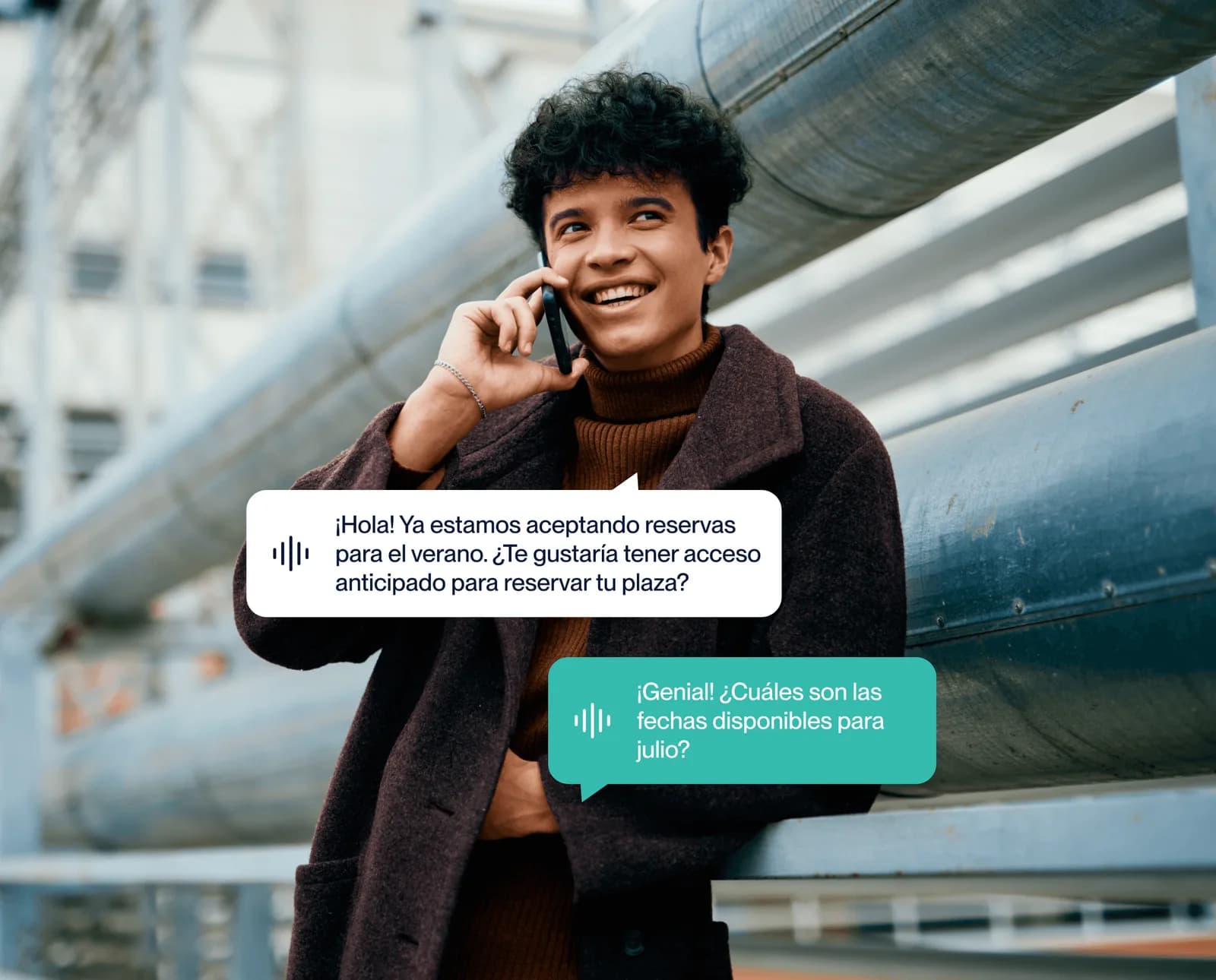
Almost no hotel knows how many calls it misses. Not because it doesn't care, but because the phone system doesn't report it and the front desk doesn't keep score of what it never got to answer. This article is a method for finding out in a week and putting a euro figure on it.
Why nobody has the number
A missed call leaves no trace anywhere anyone looks.
The PMS records bookings, not attempts. The front desk remembers the calls it took, not the ones that rang while its back was turned. And most hotel phone systems keep the log but nobody exports it, because it isn't part of any weekly report.
The result is a blind spot that behaves as though it didn't exist: what isn't measured never reaches a meeting.
The bias of the people who got through
There is a second, subtler reason. Someone who can't reach you doesn't complain: they leave. No review, no email, no appearance in any satisfaction survey.
Your entire guest-listening apparatus is built on people who did get through. The ones who didn't are invisible by design.
How to measure it this week
You don't need to buy anything. You need three data points and seven days.
1. Get the log from your phone system
Any modern phone system — or your carrier, if it's a traditional line — can give you the inbound call list with time, duration and whether it was answered.
You want two columns: inbound calls and unanswered calls. If your system doesn't distinguish, duration will do: a call under five seconds is almost never an answered call.
2. Group by time slot
Split the unanswered calls into two-hour blocks. This is where the pattern shows up, and it is almost always the same: they cluster at check-out, at check-in and around lunch.
That is no coincidence. Those are exactly the three moments when your front desk has somebody standing at the counter.
3. Estimate how many were a booking
Of the calls you do answer, what share ends in a booking? That percentage is your best proxy for the missed ones.
If your front desk doesn't track it, a week of manual counting — a tally mark for every call that ends in a booking — is enough for an order of magnitude.
The maths, with an example
With those three numbers you can put a figure on the table. The formula is deliberately simple:
missed calls per month × conversion rate × average booking value
Take a hotel missing 6 calls a day. That's about 180 a month. If one in four answered calls ends in a booking and the average booking is 180 euros, the sum comes to roughly 8,100 euros a month.
Two caveats on that number. First: it is an estimate, not an invoice, because some people who can't reach you try again or book through another channel. Second, pushing the other way: some of those bookings land through an OTA instead, so the real cost isn't only the lost booking but the commission paid on the one that does come in.
Run it with your own numbers before deciding anything. It is the same exercise that explains why the phone is the worst-measured direct booking channel in the industry.
The four slots where calls leak
Sort a typical hotel's missed calls and the same four gaps show up almost every time.
Counter rush hour
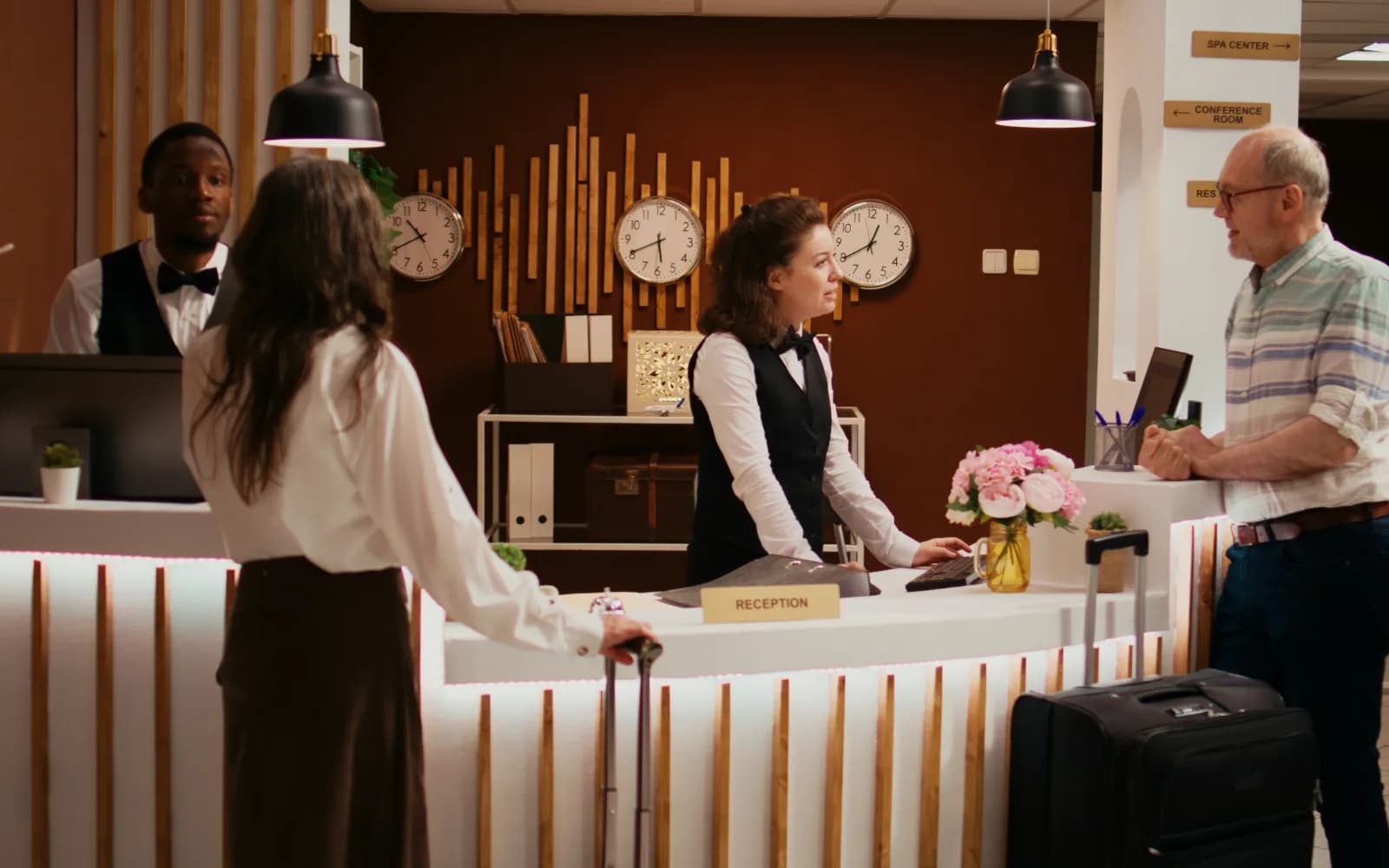
Check-out in the morning, check-in in the afternoon. There's a queue and the phone rings. The queue wins, quite rightly — and that is precisely the slot when most people call.
Lunchtime
Reduced shift, sometimes a single person. It overlaps with the slot when companies and agencies call.
Overnight
With no night reception, that's eight to ten hours of dead line. This is where international calls from other time zones land, along with urgent requests from guests already staying.
The seasonal peak
Season openings and long weekends multiply volume without the staffing changing. It is the worst time to miss calls, because it is when rates are highest.
What doesn't solve it
Before what works, it's worth ruling out what usually gets tried first.
Voicemail. Very few people leave a message to book a room; the norm is to hang up and call somewhere else. Voicemail keeps you from seeming rude — it does not capture demand.
Hiring for the peak. Staffing up to cover August and rush hours means paying all year for capacity you use for a few weeks. It's expensive and it still doesn't cover the night.
Asking people to call back later. That hands the cost of your bottleneck to the guest, at the exact moment they are comparing you with another hotel.
What does work
Two things, and they are not mutually exclusive.
The first is taking volume off the phone: making the repetitive information — hours, parking, pets, directions — so clear on your site and your Google listing that it stops generating calls at all. It's free and it shrinks the problem.
The second is always answering, which is where automation comes in. An AI voice agent takes every simultaneous call at any hour, resolves the routine questions and creates the booking in the PMS. The ones that need a person go to the front desk with the context already gathered.
Which of the two you need is decided by the time pattern you found when measuring: if your missed calls cluster in two specific slots, it's a capacity problem. If they're spread across the day and night, it's structural.
Frequently asked questions
How many missed calls count as normal?
There is no single benchmark that works for everyone: it depends on size, hotel type and how much your website already answers. The useful exercise isn't comparing yourself to an industry average, it's knowing your own figure and watching it move.
What if most of my calls aren't bookings?
That's the usual case, and it still matters: every enquiry occupying your front desk is time not spent on someone who does want to book. Measuring the enquiry-to-booking ratio is as useful as measuring the total.
Can I measure this without changing phone systems?
Yes. Nearly every phone system and carrier can produce an inbound call log even if they don't surface it in a dashboard. It's a matter of asking, usually as a monthly export.
The first step
Measure one week before evaluating any solution. The number changes the conversation: it stops being an argument about whether to do something and becomes an argument about what.
If the pattern matches what we solve, AI for hotels shows how it works in a real hotel and voice agent covers the product detail.