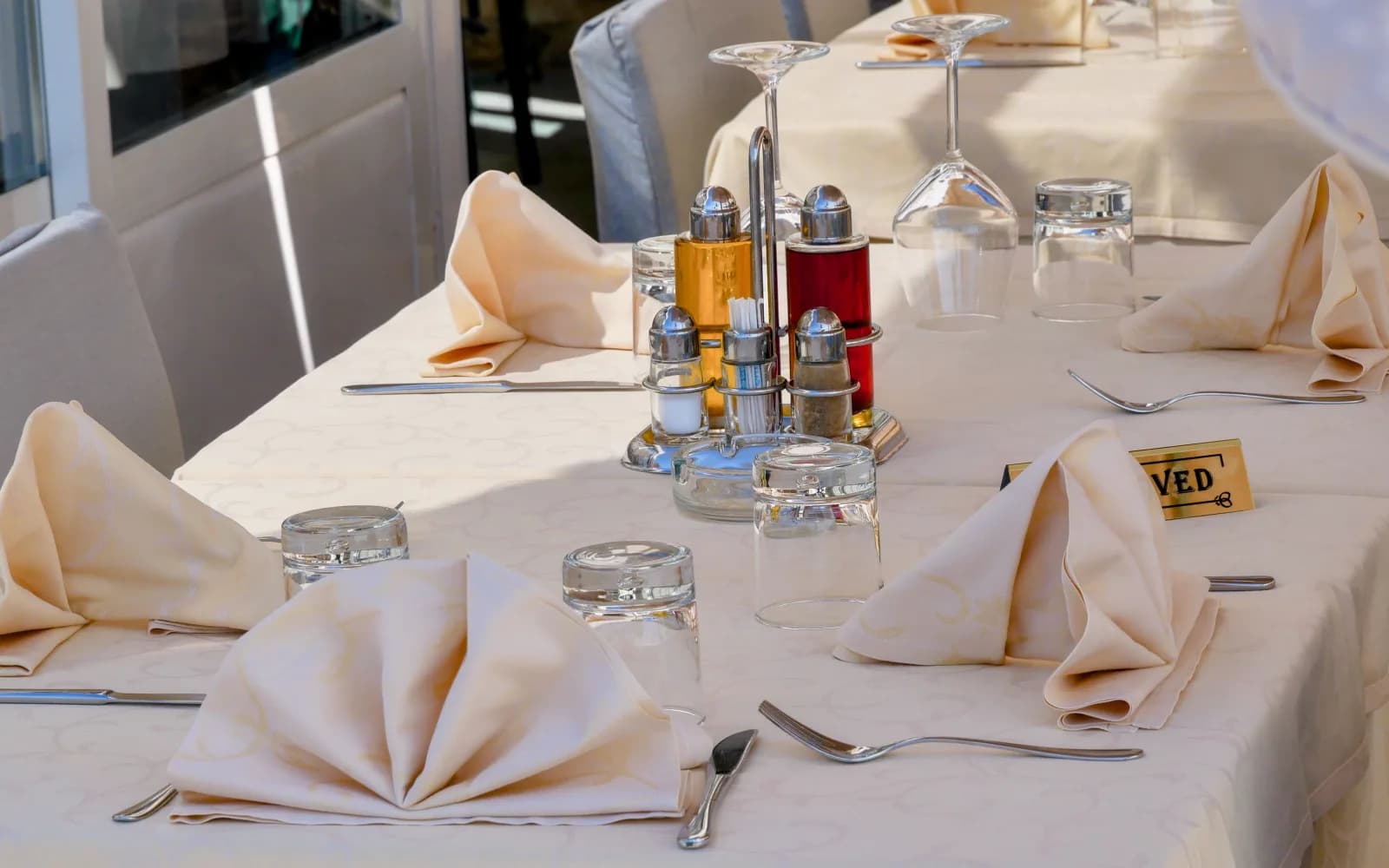
A corporate dinner for 30 is worth as much as fifteen tables for two, gets decided weeks in advance, and is lost in a single unanswered call. It is the highest-value booking of your year and usually the one with the worst process behind it.
Why it is lost more than any other
A table for two closes in a web form. A table for thirty does not.
Group bookings come with questions no website answers: whether there is a private room, whether the menu can be fixed in advance, whether you invoice the company, how late the final headcount can be confirmed. That is why they almost always end up on the phone, and why they get lost: they arrive during service, they take longer than a normal booking, and they compete with a full dining room.
What missing one costs
Missing a call for two costs you one cover. Missing a group of thirty costs you fifteen.
And it costs you next year too: the corporate dinner is a repeat booking. Whoever organises it comes back to the same place if it worked, without comparing again.
What the organiser needs to know
Answer these six things before they are asked and the booking is half closed. They are worth writing down where the whole team can reach them.
Capacity and space. How many fit, whether there is a separate room or it's in the main dining room, whether you can set a U-shape or tables of eight.
Fixed menu and price per person. A per-head price, with drinks included or clearly excluded. The organiser has a per-person budget, not a total one.
Allergies and diets. How many alternatives there are and by when they must be told.
Deposit and cancellation policy. How much is paid up front and what happens if the group drops from thirty to twenty-four.
Deadline for the final headcount. It is the question that causes the most anxiety and almost nobody answers it up front.
Invoicing. In the company's name, with which details, and issued when.
The four moments it falls through
1. The first call, unanswered
It comes in at 1:40 p.m. or 8:30 p.m., which is when the organiser has a gap. That is exactly when your dining room is full. If nobody answers, they call the next name on their list.
2. The quote that never arrives
It was promised "this afternoon" and went out three days later. By then another restaurant has closed it. Speed of response weighs more than price.
3. The silence between booking and date
A group booked in October for 18 December means eight weeks with no contact. If nobody confirms along the way, no-show risk climbs. It is worth reading how to reduce no-shows too, because with groups the damage multiplies.
4. The last-minute headcount change
It was 30 and it's 24. Without a clear policy agreed in writing from the start, this ends in an argument and a bad review, even if the dinner itself went well.
The Christmas season calendar
Corporate dinners are not searched for in December. They are searched for much earlier, and that lag is what most restaurants get wrong.
September and October is when companies start moving on it and asking for quotes. That is when your group menu needs to be settled, with a per-person price and published conditions.
November is for confirmations and deposits, not acquisition: anyone who didn't close in October is already on their second choice.
December is pure operations, and the only room left comes from other people's cancellations.
The practical consequence: if you publish your group offer in November, you have missed half the demand.
How to set up the process
Three pieces, and none of them needs technology to start.
A groups page. Capacity, menus, price per person, deposit and deadlines. Having one lets you answer with a link instead of a PDF somebody has to write.
A one-page call script. The six answers above, so anyone on the team can close a group booking without hunting for the manager.
A scheduled reminder. One message two weeks out and another 48 hours before to confirm the final headcount. That is what turns an October booking into a dinner that actually happens.
Where automation fits
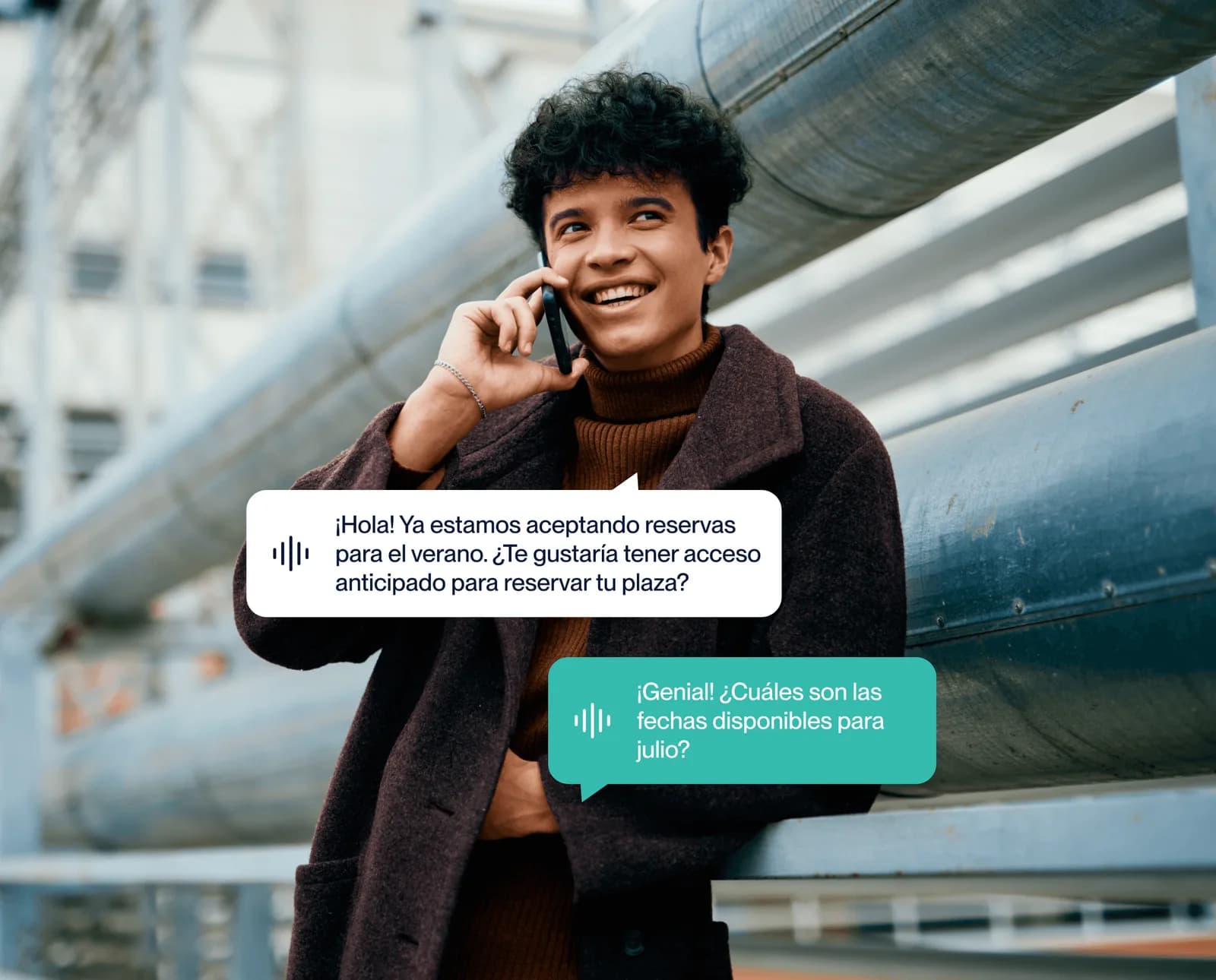
The real bottleneck is the first call, the one that lands mid-service. An AI voice agent always answers, gives capacity, per-person price and conditions, and collects the group's details so your manager can call back with everything ready.
The follow-up afterwards — confirmation, reminder, final headcount — is exactly what WhatsApp campaigns handle without anyone needing to remember.
What should not be automated is the close. A large group is negotiated by a person; what automation contributes is getting that person to the conversation in time.
Frequently asked questions
How many diners make it a group?
It depends on your room, but the operational threshold is usually where the menu stops being à la carte: between eight and twelve people. Below that a normal booking works; above it you need a fixed menu and a deposit.
Should I ask for a deposit?
For large groups and high-demand dates, yes: it cuts no-shows and filters out people holding three restaurants at once. What matters isn't the amount but that the policy is clear and in writing before you confirm.
What if the group shrinks at the last minute?
It usually does, which is why a guaranteed minimum is worth agreeing in advance: you bill for that minimum even if fewer turn up. Agreed at booking it is a condition; announced on the day it is a conflict.
Where to start this week
If you do only one thing before October, make it publishing your group menu with a per-person price and conditions somewhere reachable. That is what lets you answer in five minutes instead of three days.
The rest of the floor operation — calls, confirmations and reminders — is covered in AI for restaurants.