In Miami-Dade County, 67% of residents aged five and over speak Spanish at home, about 1.8 million people, and half of them speak English less than "very well", according to the Census Bureau's 2024 American Community Survey. Add the visitors from Latin America and Spain, and a Miami restaurant's phone rings in two languages all day.
Most restaurants here already have bilingual staff. The problem is not the language, it is the phone itself: it rings hardest exactly when the host stand is busiest, and it does not wait for the one person on shift who can take it. This article explains what a bilingual AI host does, why it fits Miami particularly well, and how to set one up so it sounds like your restaurant rather than a call center.
Miami's phone problem is a bilingual one
Three things make the phone harder in Miami than in most US cities:
- Two languages, all day. With two thirds of the county speaking Spanish at home, a Spanish-language call is not an exception to route somewhere; it is half the phone.
- A guest base that changes every week. Tourists, snowbirds and visitors from Latin America do not know your restaurant, so they call to ask before they book: about the dress code, valet, the terrace, whether you take groups.
- Staff stretched thin. The National Restaurant Association's 2026 hiring report found that 22% of US operators did not have enough staff to meet demand in 2025. Wherever that bites, the phone is the first task to slip.
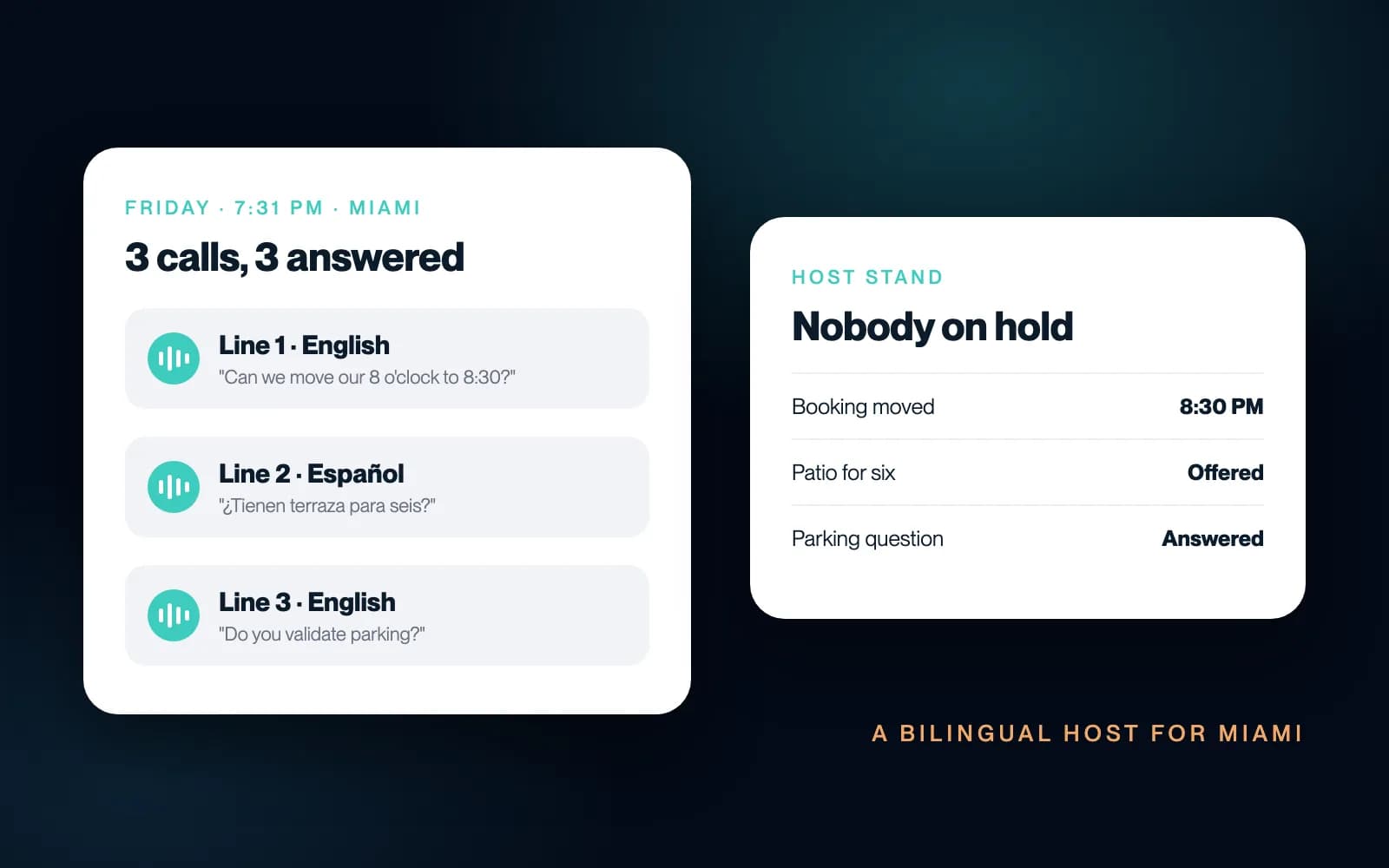
Put those together and the bilingual host on duty is doing three jobs during the dinner rush: greeting the guests at the stand, managing the floor, and answering a phone that may be speaking either language.
What a bilingual AI host actually does
A bilingual AI host is a voice agent that answers your restaurant's phone. Concretely, on every call it:
- Answers on the first ring, at any hour, and takes every simultaneous call: the Friday 7 PM rush does not create a queue.
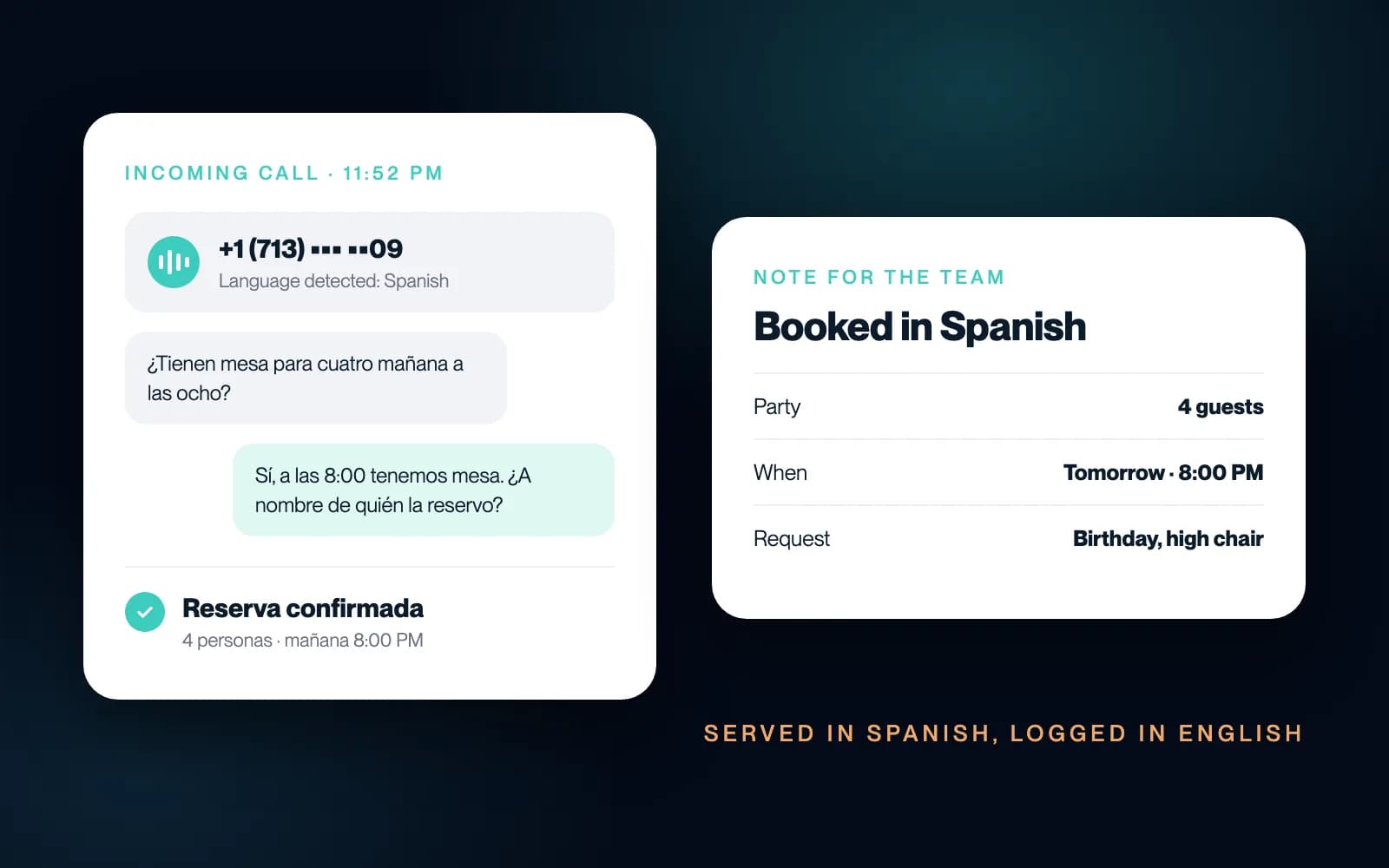
- Detects English or Spanish from the caller's first words and holds the conversation in that language, switching if the caller does. Nobody has to press 2.
- Checks real availability in your reservation system and offers alternatives when the requested time is full.
- Books, changes and cancels reservations directly in the book your host stand already uses.
- Answers the questions your guests actually ask: valet or parking, dress code, whether the terrace is covered, the kids' menu, corkage, private events.
- Writes down what matters: allergies, birthdays, a high chair, a table away from the speakers.
- Transfers to a person with a summary when the call needs a manager.
The team at the stand sees a reservation, not a language. The guest who booked in Spanish and the guest who booked in English show up in the same list, with the same notes.
Call it in English. Then in Spanish.
Book a demo and test the agent yourself in both languages, booking into a real reservation system.
Book a demoWhy bilingual staff alone don't cover the phone
Most Miami restaurants already have bilingual hosts, so the language itself is rarely the gap. The gap is everything around it:
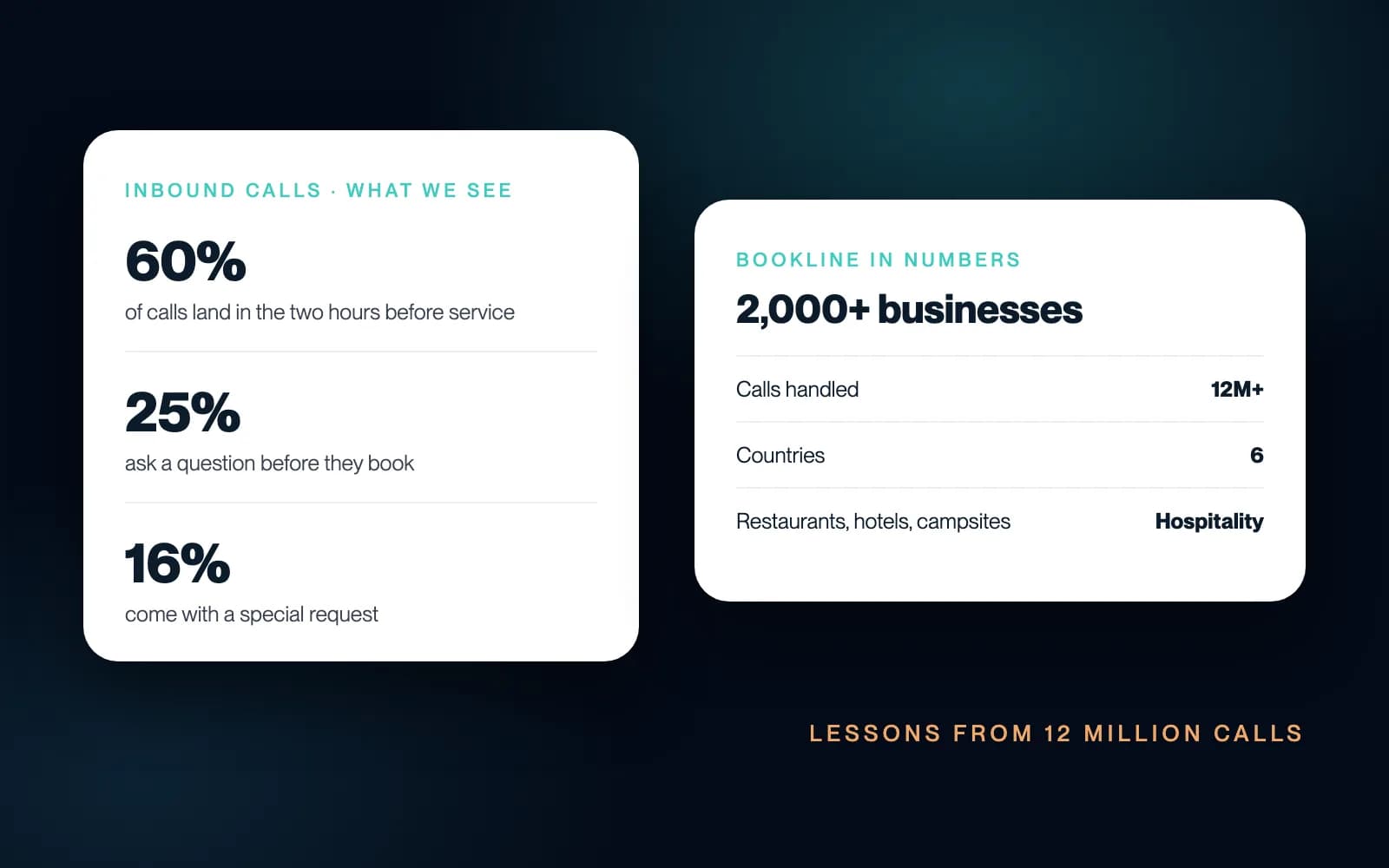
- Timing. In the data from the restaurants we serve, 60% of calls arrive in the two hours before service. In Miami that is the same window in which the host stand is busiest with walk-ins and the first seatings.
- Concurrency. One host, one call. The second caller rings out.
- Hours. Late-night and early-morning calls, from locals planning the weekend or visitors in another time zone, go to voicemail.
- New guests. 80% of the people who call a restaurant have never contacted it through any other channel. In a city with this much tourism and this much competition, a first-time caller who gets voicemail simply calls the next place.
A bilingual AI host does not replace the people at the stand. It takes the phone off them, in both languages, so they can look after the guests who are already there.
How to make it sound like your restaurant
A generic agent sounds generic. What makes the difference is the setup, and it is the same work you would do to train a new host:
- Give it your real answers, in both languages. Not a translated website: how you actually answer about valet, the dress code, the patio when it rains, kids, dogs, corkage.
- Set the tone. A Brickell steakhouse and a Little Havana café should not sound the same. Formal or warm, short or chatty, "usted" or "tú": you decide.
- Define the rules. Maximum party size by phone, when to take a deposit, which requests go to a manager, how far ahead people can book.
- Decide when it answers. Every call, only the ones your team does not pick up after a few rings, or only after hours.
- Confirm in the guest's language. A confirmation message in Spanish or English reduces no-shows and gives guests an easy way to cancel.
- Disclose recording where required. Florida requires the consent of every party to record a call (Fla. Stat. §934.03), so if calls are recorded, the greeting should say so, in both languages. This is not legal advice.
Where Bookline comes from
Bookline builds AI voice and WhatsApp agents for hospitality, and we come from markets where answering in Spanish is the starting point: Spain, where most of our customers are, and Latin America. Our agents serve more than 2,000 hospitality businesses and have handled more than 12 million calls, in Spanish, English and the other languages our venues' guests speak.
That is the experience we bring to Miami. We integrate with the reservation systems US restaurants use, OpenTable and SevenRooms among them; the integrations page has the full list. If you want the background, how to serve Spanish-speaking guests by phone 24/7 compares the alternatives, and what 2,000+ hospitality businesses taught us covers the call patterns behind these numbers.
Frequently asked questions
What Miami operators ask most about a bilingual AI host.
Does the guest have to choose English or Spanish?
No. The agent identifies the language from the first words and answers in it. If the guest switches mid-call, which happens a lot in Miami, the agent switches with them.
Can it handle Spanglish?
Mixed-language calls are everyday Miami, so test it the way your guests actually talk: book a demo, call it, and switch languages mid-sentence. It follows the language the caller is speaking and switches when they do.
Do I need to change my phone number?
No. Calls to your existing number are forwarded to the agent, all of them or only those your team does not answer.
Does it work with my reservation system?
Bookline connects to the main reservation platforms, including OpenTable and SevenRooms. Check the integrations list, or ask us about yours during the demo.