If you run a restaurant and you're not using WhatsApp to talk to your customers yet, you're leaving money on the table. Literally.
Email has an open rate of around 20%. WhatsApp hits 98%.
That difference changes everything. When you send a WhatsApp campaign to your customers, almost all of them will read it. And in the restaurant business, where filling tables at the right moment can be the difference between a dead Tuesday and a profitable week, that kind of direct reach is extraordinarily valuable.
In this guide, we'll cover what WhatsApp campaigns for restaurants actually are, how they work in practice, which types of campaigns get the best results, and how to get started today.
Running a hotel rather than a restaurant? Check out our guide to WhatsApp campaigns for hotels. And if you want to dig deeper into a specific area, we have guides dedicated to the types of WhatsApp templates and how to create your first campaign step by step.
What Is a WhatsApp Campaign for Restaurants
A WhatsApp campaign for restaurants is a mass (or segmented) message sent to your customer base through WhatsApp, designed to drive one specific action: a booking, a visit, an order, or a review.
Unlike the one-off messages you might already send through WhatsApp, a campaign uses the WhatsApp Business API to reach hundreds or thousands of contacts at once, fully automated and fully personalized.
Think of it as email marketing, but with open rates five times higher, on the channel where your customers already spend several hours a day.
Some concrete examples of what a WhatsApp campaign for a restaurant looks like:
- Sending your special Valentine's Day menu to every customer who visited around that time last year
- Winning back customers who haven't booked in 60 days with an exclusive offer
- Letting your contact list know you've opened your terrace for the summer
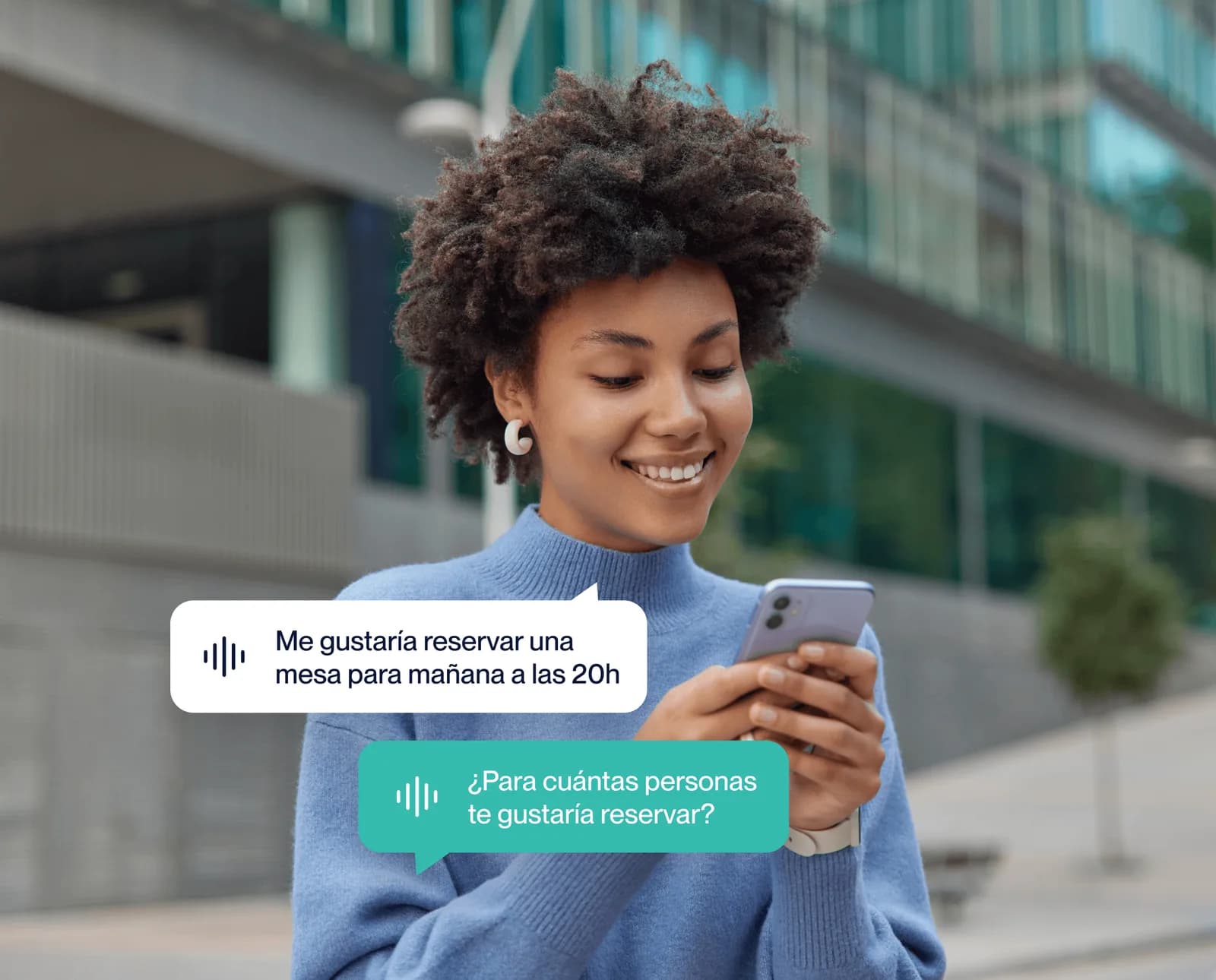
- Reminding customers with a reservation that they have a table tomorrow at 9pm
Why WhatsApp Outperforms Email and SMS in the Restaurant Industry
Before we get into the types of campaigns, it's worth understanding why WhatsApp is the winning channel for restaurants in 2026.
The numbers that explain it all
- Email: 20% open rate, 2-3% response rate, very low cost per send
- SMS: 75-80% open rate, 5-10% response rate, low cost per send
- WhatsApp: 95-98% open rate, 25-40% response rate, low-to-moderate cost per send
WhatsApp combines the immediacy of SMS with the richness of email (you can send images, documents, buttons, lists) on a channel your customers experience as personal and close.
The trust factor
For most people, WhatsApp isn't just a messaging app — it's their primary way of communicating with other people. When a restaurant messages you on WhatsApp, it doesn't land in a spam folder or an overflowing inbox. It lands exactly where messages from friends and family land.
That creates a sense of closeness and trust that no other marketing channel can match.
Perfect timing
WhatsApp lets you be extremely precise about timing. Sending a campaign about today's lunch special at 11:30am, right when people are starting to think about what to eat, has a completely different impact than that same message sitting in an email inbox at 9am.
Start Sending WhatsApp Campaigns Today
Bookline connects your restaurant to the WhatsApp Business API and handles templates, segmentation, and consent for you.
Request Your DemoThe 6 Types of WhatsApp Campaigns That Work Best for Restaurants
Each type of campaign serves a different goal — from winning back customers who've drifted away to filling the slowest nights of the week. Here are the six types that work best in the restaurant business.
Win-back campaigns for inactive customers
This is probably the highest-ROI campaign type for any restaurant.
You have customers who came in once or twice and haven't been back in months. It's not that they didn't like it — they just forgot, life got busy, and they never had a concrete reason to return. A win-back campaign gives them that reason.
- Segment your database by last visit: customers who haven't booked in 45, 60, or 90 days
- Send them a personalized message with a specific reason to come back (a new menu item, the season, a limited-time offer)
- Include a direct booking button
"Hi [Name] 👋 We haven't seen you in a while and we miss you! We just refreshed our menu with new seasonal dishes we think you'll love. Feel like coming back? Book your table right here."
Typical response rate: 20-35%. A restaurant with 500 inactive customers can generate 100-175 additional bookings from a single campaign.
Filling slow days and off-peak hours
Tuesday and Wednesday nights are every restaurant's enemy. WhatsApp campaigns are perfect for driving traffic into those slots.
Identify the days and hours where you have spare capacity, then send a targeted campaign with an offer built specifically for those moments.
"[Name], any plans for tonight? We've got tables available, and this week we're offering 15% off on Tuesdays — just for you. Book before 6pm."
The discount doesn't need to be huge. It's the combination of personalization, scarcity (limited spots), and easy booking that actually converts.
Special dates and seasonal moments
Valentine's Day, Christmas, Easter, Mother's Day, a customer's birthday — every date is a business opportunity.
What sets a well-crafted WhatsApp campaign apart from a generic email is real personalization. If you know a customer celebrated their anniversary with you last year, you can message them on that date with something that genuinely surprises them.
"Happy birthday, [Name]! 🎂 We've been thinking of you here at [Restaurant]. As a gift, we'd love to offer you a free glass of cava if you come celebrate with us this month. Interested?"
"Valentine's Day is just 10 days away and tables are filling up fast. We've put together a special 4-course menu with wine pairing included. Should we save you a table?"
New features and seasonal openings
Opening your terrace? Launching a new menu? Bringing in a new chef? Every piece of news about your restaurant is a legitimate reason to reach out to your customers.
This type of campaign has a huge advantage: it doesn't feel like advertising. It's relevant news about a place the customer already likes.
"Our terrace is open! ☀️ This weekend we're opening our outdoor space, and we've put together a special summer menu. The first 20 people to book a terrace table get a welcome drink on us."
Getting more reviews
Google reviews are a restaurant's local SEO. The more you have, and the better they are, the more visible you become when someone searches for where to eat in your city.
WhatsApp is the perfect channel for requesting reviews because the response rate is extremely high, and if you send it a few hours after the visit, the message arrives while the experience is still fresh.
"[Name], thanks for coming in today ☺️ We hope you had a great time. If you have a moment, it would mean a lot if you left us a review on Google. It only takes 2 minutes and it means everything to us."
Between 15% and 25% of recipients leave a review when the message comes through WhatsApp, compared to under 5% when requested by email.
Upselling and selling experiences
Beyond filling tables, WhatsApp lets you sell higher-value experiences: tasting menus, wine-pairing nights, private events, cooking classes, or gift packages.
"[Name], every December we run our wine-pairing nights with the sommelier, and spots go fast. We've expanded the format this year. Want us to send you the details before we announce it publicly?"
This type of campaign works especially well when you first ask whether they want the information — which prompts a reply — and then follow up with the details.
WhatsApp Templates for Restaurants: Ready-to-Use Messages
Keep in mind that mass messaging requires templates approved by Meta — at Bookline, we handle that process for you. Below is a selection of adaptable templates for the most common situations.
Booking confirmation
"Hi [Name] ✅ Your reservation at [Restaurant] is confirmed for [day] at [time] for [number] people. If you need to change it, just message us here. See you soon!"
Booking reminder (24 hours before)
"[Name], we're expecting you tomorrow 🍽️ You have a table at [time] at [Restaurant]. If anything changes, just let us know ahead of time. We can't wait to see you!"
Inactive customer win-back
"Hi [Name] 👋 We haven't seen you in a while and wanted to check in. We've refreshed our menu with seasonal dishes. Feel like coming back? Booking is quick and easy."
Slow-day offer
"[Name], eating out this week? We've got a table free tonight, and we just added a new dish to the menu we can't wait for you to try."
Birthday campaign
"Happy birthday, [Name]! 🎉 Everyone at [Restaurant] wishes you a wonderful day. As a little treat, we'll have a dessert on the house waiting for you if you come celebrate with us this month."
Review request
"Thanks for coming to [Restaurant] today, [Name] ☺️ We hope you had a great time. Could you leave us a review on Google? It only takes 2 minutes and it helps us so much."
How to Build Your Contact List (and Stay GDPR-Compliant)
Before sending any WhatsApp campaign, you need two things: contacts and their consent. GDPR is very clear on this point, and skipping this step can cost you a serious fine.
Legal ways to collect contacts
- During the booking process: when a customer books online or by phone, you can ask for their WhatsApp number and capture consent in the form or verbally, with a record kept.
- With a QR code on the table: place it on the table or on the receipt, inviting customers to join your WhatsApp list in exchange for something of value (a discount on their next visit, the daily specials by WhatsApp, access to events).
- On social media: a link to a form or WhatsApp chat where customers opt in voluntarily.
- At the time of payment: the waiter can simply ask if they'd like to receive updates by WhatsApp.
The GDPR essentials
- The customer must give explicit, specific consent — a generic "I accept the terms and conditions" doesn't count
- You must clearly state exactly what you'll use their number for
- The customer must be able to opt out easily at any time
- You must keep a record of that consent
At Bookline, consent management is built directly into the platform, so you stay compliant with European regulations automatically.
Mistakes Restaurants Make with WhatsApp Marketing
These are the most common mistakes that hurt the performance of a WhatsApp campaign — and can even get your number blocked.
Using the WhatsApp Business app instead of the API
The free WhatsApp Business app is fine for handling one-on-one conversations, but it doesn't support mass sending or automation. If you try to run campaigns through the app, Meta can permanently block your number.
Sending without prior consent
Sending messages to people who haven't given you permission is a GDPR violation, and it can lead to a wave of spam reports, which hurts your WhatsApp Quality Rating and can eventually get your number blocked.
Not segmenting
Sending the same message to your entire contact list without segmenting is like handing out flyers on the street. A customer who only comes in for lunch doesn't need your corporate-dinner campaign. A regular who comes for date nights doesn't need to hear about your group menu.
Sending too often
WhatsApp is an intimate channel. If you send messages every week without real value, customers will stop reading them or, worse, block you. The general rule: one to two campaigns a month, always with relevant content.
Not including a clear call to action
Every campaign should have a single goal and a single possible action. If you mix "come for dinner" with "follow us on Instagram" with "leave a review," the customer doesn't know what to do and ends up doing nothing.
Metrics to Track in Your WhatsApp Campaigns
Before you launch your second campaign, decide what you're going to measure on your first. These are the metrics that actually matter:
- Delivery rate: the percentage of messages that reach the recipient. Healthy target: above 98%.
- Open rate: the percentage of messages read. Healthy target: above 80%.
- Response rate: the percentage of contacts who reply to the message. Healthy target: 20% to 40%.
- Click-through rate: the percentage who click the button. Healthy target: 15% to 30%.
- Conversion rate: the percentage who complete the action (booking, review, etc.). Healthy target: 5% to 20%.
- Opt-out rate: the percentage who unsubscribe after the campaign. Healthy target: below 2%.
If your opt-out rate goes above 2%, it's a sign you're sending messages that aren't relevant, or sending them too often.
How to Get Started with WhatsApp Campaigns at Your Restaurant
If you've made it this far, you have a clear picture of what WhatsApp campaigns can do for your restaurant. The next step is putting it into action.
With Bookline, you can:
- Connect the WhatsApp Business API quickly, without technical headaches
- Build and segment your customer contact list
- Create campaigns from templates optimized for the restaurant industry
- Automate confirmation, reminder, and post-visit messages
- Track the results of every campaign in real time
Most of our restaurants send their first WhatsApp campaign within 48 hours of onboarding.
Frequently Asked Questions About WhatsApp Campaigns for Restaurants
Before you launch your first campaign, here are the questions restaurants ask us most.
Do I need the WhatsApp Business API to send campaigns?
Yes. The free WhatsApp Business app doesn't support mass sending. To run campaigns, you need access to the API, which you can get through platforms like Bookline, an official Meta Business Solution Provider.
How much does it cost to send a WhatsApp campaign?
The cost depends on two factors: the platform you use and Meta's per-conversation fees. Each business-initiated marketing conversation typically costs around €0.08-0.10. For 500 contacts, that works out to roughly €40-50 per campaign — at a 10% conversion rate, that's 50 bookings for €50.
How often should I send campaigns?
The recommendation is no more than 1-2 campaigns per customer per month. Relevance is the key: one well-segmented campaign a month beats four generic ones a week.
Can I send campaigns from my personal WhatsApp number?
You shouldn't. Besides violating WhatsApp's terms of service, your personal number could end up permanently blocked. You need a business number set up through the API.
What happens if a customer doesn't want to receive any more messages?
They need to be able to opt out easily, just by replying "STOP" or something similar. With the right platform, that process is handled automatically, and the contact is removed from your list for future campaigns.
Do WhatsApp campaigns work for every type of restaurant?
Yes, although the type of campaign varies. A casual, daily-menu restaurant can use WhatsApp to announce the dish of the day and fill tables during slow hours. A fine-dining restaurant can use it to sell tasting menus and manage exclusive experiences. The channel works for everyone; the strategy just adapts.