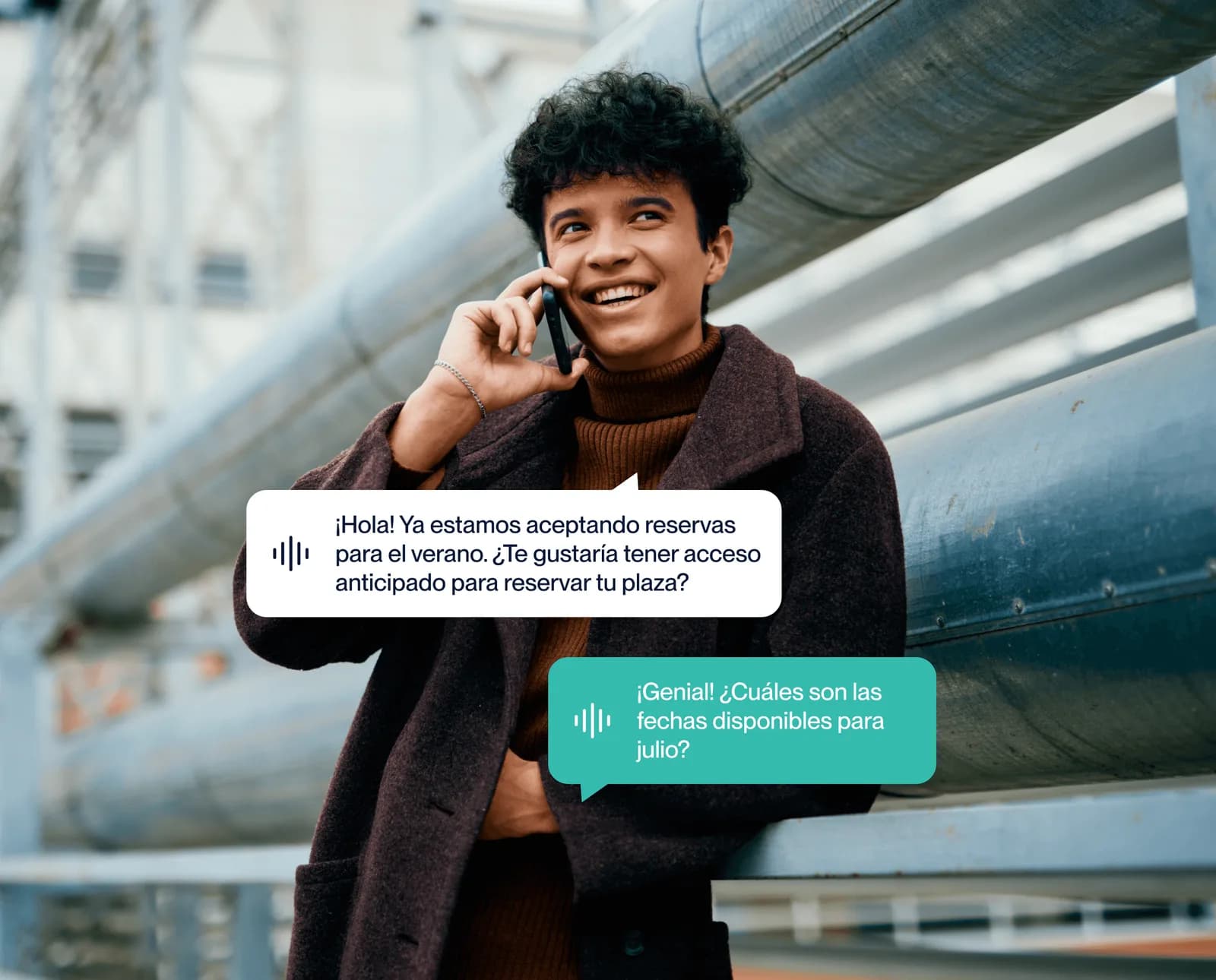
Every week, thousands of hotels lose bookings that never get confirmed. A guest asks about availability for August, hears nothing back within 24 hours and books with the competition. Another stayed a year ago and no one has given them a reason to return. And the rooms left empty on a quiet Tuesday in the low season stay empty because no one offers them to the people who could fill them.
WhatsApp campaigns change this equation. Instead of waiting for the guest to make the first move, your hotel takes the initiative: it recovers lost interest, suggests alternative dates at the right moment and keeps the relationship alive between stays. This guide explains how they work, which use cases deliver the most return in accommodation and how to get started. Running a restaurant? We have a dedicated guide for restaurants.
What WhatsApp campaigns are for a hotel
A WhatsApp campaign is a send of personalised messages to a segment of contacts with a specific goal: recovering a booking, promoting certain dates, re-engaging a guest or requesting a review. Unlike the individual messages handled by reception, campaigns run automatically and reach hundreds of contacts with a single send.
In accommodation, the most effective campaigns are not mass advertising. They are contextual messages that reach the right guest, at the right moment, with the right pitch. A hotel that was fully booked when someone enquired can notify that person the moment a room that fits opens up. A hotel with low occupancy over a long weekend can send an offer only to those who visited that destination the year before.
WhatsApp has an open rate above 90% compared with 20% for email, and messages are read within the first few minutes of arriving. That makes it the most effective channel for communications that call for immediate action — like confirming a room before someone else books it.
The 6 most profitable use cases in a hotel
Not every campaign performs the same. These are the six flows that work best in accommodation, from the most immediate to the most focused on loyalty.
1. Recovering lost enquiries and bookings
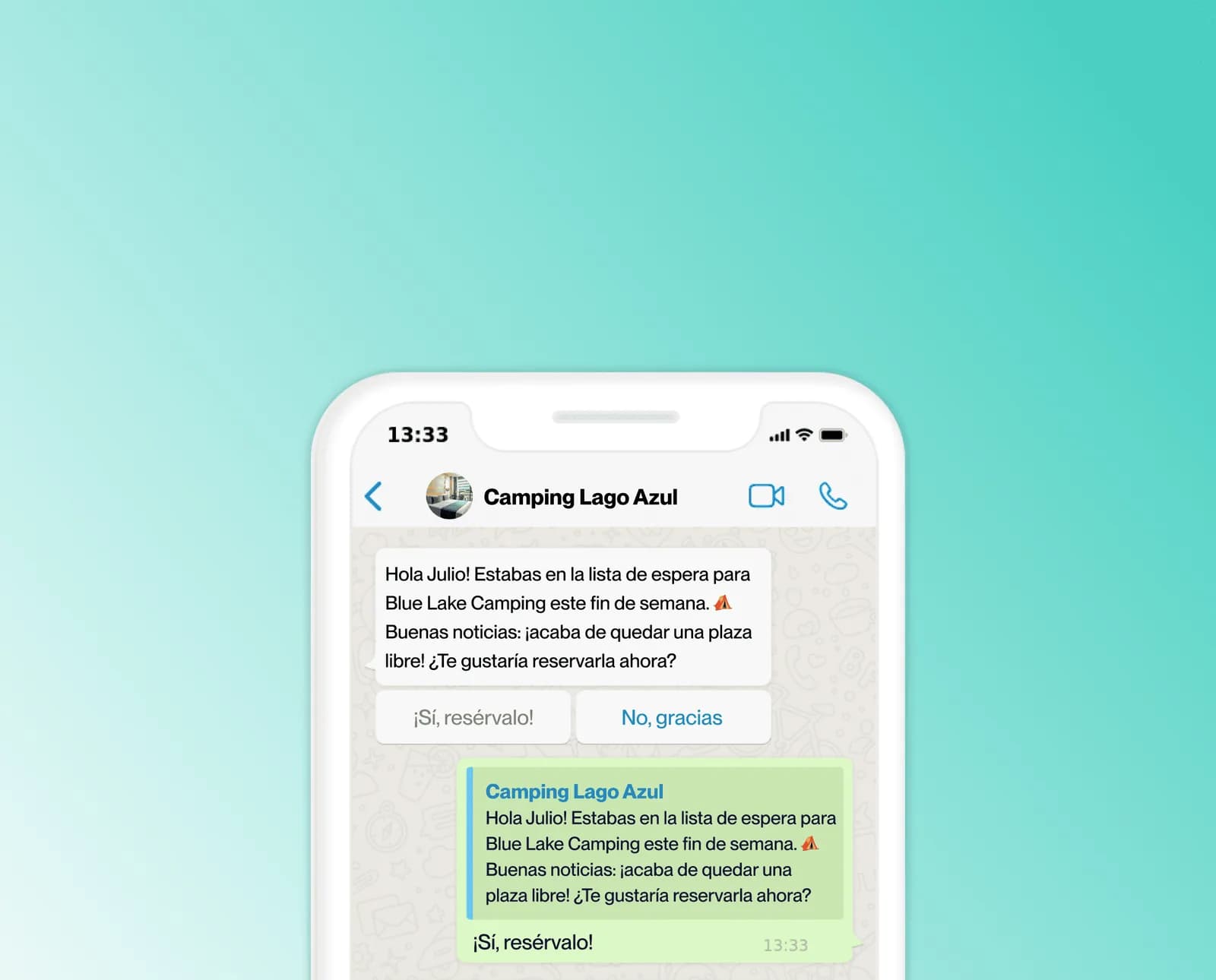
When a guest asks about dates you don't have or the hotel is fully booked, the system records their interest and preferences. When a room that fits opens up, they receive an automatic WhatsApp message with the link to confirm. Conversion rates for this flow are high because the guest had already shown intent to book.
2. Re-engaging past guests
Guests who stayed more than 90 days ago — or last season — are the cheapest leads: they already know you, already trust you and already know what you offer. A re-engagement campaign that recalls their last stay and suggests a reason to return generates bookings at minimal cost.
3. Seasonal and event campaigns
Long weekends, Easter, summer, Christmas, conferences and local events. Every season generates predictable demand that you can anticipate with campaigns scheduled weeks in advance. The hotel that launches its Easter offer in February beats the one that launches it in March, and an early-booking rate rewards those who decide first.
4. Upselling and post-booking upgrades
Once the booking is confirmed, the guest is at their most receptive. It's the ideal moment to offer a room upgrade, spa access, late check-out, half board or an airport transfer. Upselling campaigns sent 48-72 hours after confirmation have especially high conversion rates.
5. Managing low occupancy
Low season, weeknights, that part of the hotel that's hard to fill. Instead of cutting prices across the board, a campaign lets you offer an exclusive perk to a specific segment, preserving the perception of value and without compromising rate parity with the OTAs.
6. Requesting post-stay reviews
78% of guests who have a good experience don't leave a review if no one asks them to. A WhatsApp message sent a few hours after check-out multiplies the review rate on Google. Some Bookline operators have increased their monthly reviews by more than 25% with this flow alone.
Turn your enquiries into confirmed stays
Bookline sets up the module, gets your templates approved and sends on your behalf. Tell us about your hotel and we'll design a 30-day pilot.
Request your demoWhat you need to launch your first campaign
The fundamental requirement is having a contact base that has given explicit consent to receive commercial communications. Once you have the base, you need three things: a platform with access to the official WhatsApp Business API, message templates approved by Meta, and a segmentation approach so you know who you send what to.
If you want the detail on each template, we have a guide dedicated to the types of WhatsApp templates. And if you'd prefer the complete journey from start to finish, here's how to create your first campaign step by step.
How to measure the result
The key metrics are: open rate, response rate, conversion rate and cost per booking generated. In hotels, the cost per direct booking obtained through a campaign is usually well below the commission the OTAs take — every booking you recover through WhatsApp is a booking with no intermediaries and no commission.
Common mistakes
The most common mistake is sending the same message to the entire database without segmenting. The second is not respecting timing: the best results come from sends between 10:00 and 13:00, and between 17:00 and 19:30. The third is not having a response flow set up: if the guest replies and no one answers for hours, the impact is lost.
How to get started with your WhatsApp campaigns
With Bookline you set everything up from your portal: you upload the contact base, choose an approved template, personalise it with variables such as the name or the dates, and measure the full funnel — sent, received, read and bookings. If you want to see the module from the inside before you start, here's how Bookline Campaigns works step by step.
And if you'd rather see it with your own guest base, we'll design a 30-day pilot with you for your hotel.