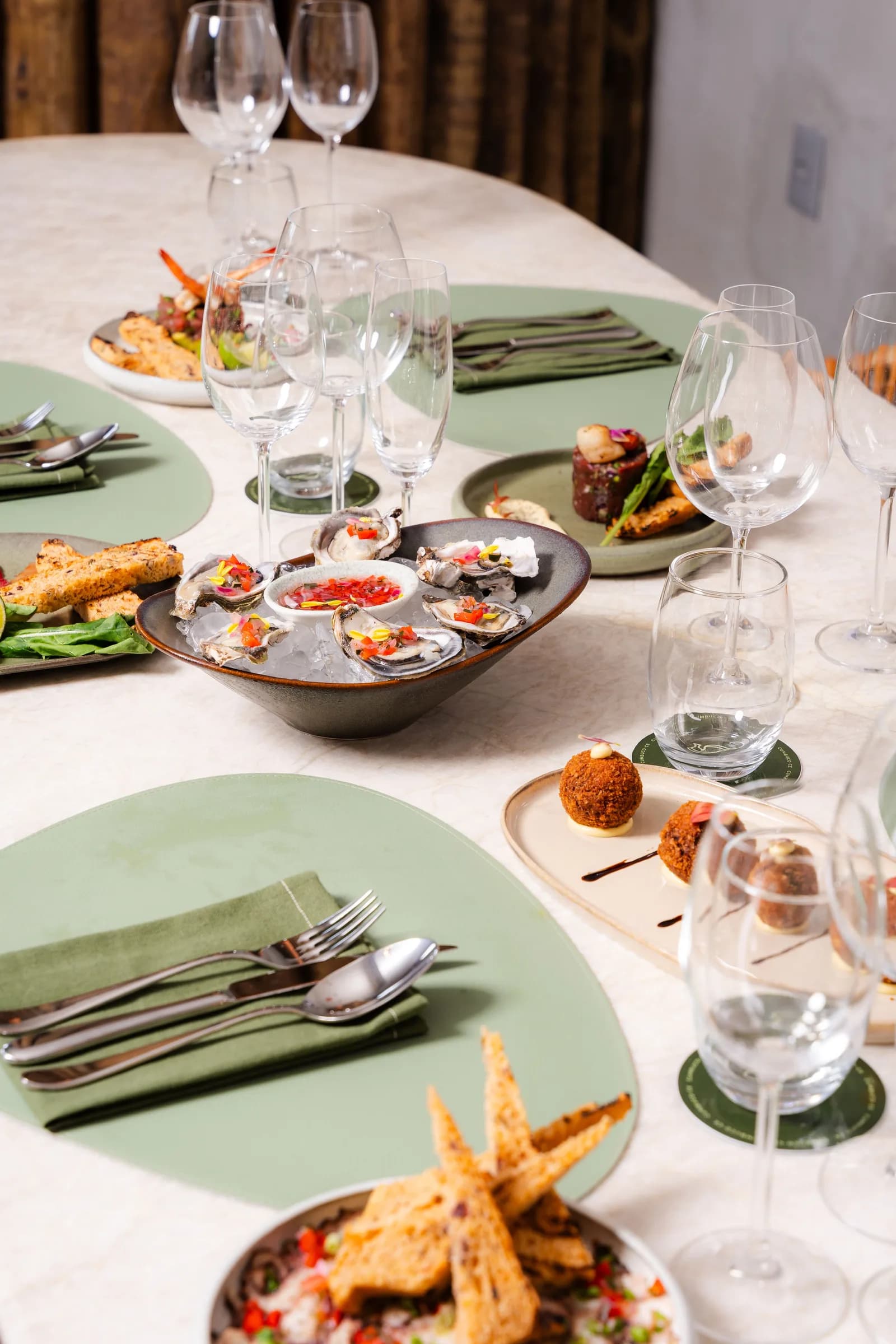
There is a pattern that repeats itself in a lot of restaurants: a full dining room, a phone that never stops, great reviews, and then the numbers don't add up at the end of the month.
The reason is usually the blind spot between what comes in and what it costs to produce it. Managing bookings and occupancy well is half the job. The other half is knowing exactly what every dish leaving your kitchen costs. And that is where the escandallo — the recipe costing sheet — comes in.
Profitability has two levers
A restaurant can improve its results in two ways: increase revenue or reduce costs. Most work on the first — more bookings, better occupancy, smarter shift planning — and neglect the second.
The recommended average food cost sits between 28% and 35% of turnover. Yet it is common to find restaurants operating above 40% without knowing it, simply because they have never worked out precisely what each portion costs them.
What is an escandallo?
An escandallo is the technical sheet for every dish: it details the real cost of each ingredient, applies the trim and waste losses (what you lose peeling, cooking or cleaning), and works out the selling price you need to make a profitable margin.
Without a properly built costing sheet, the menu price is a hunch. With one, it is a decision.
The elements that make up a basic costing sheet are:
- The unit cost of each ingredient (excluding VAT)
- The real yield once trim and waste losses are applied
- The total net cost per portion
- The resulting selling price for your target margin
A side dish that looks like an afterthought can cost €0.40 per portion. In a restaurant that serves it 60 times a day, that is €720 a month of uncontrolled cost: more than €8,600 a year.
Why most restaurants don't do it (and what it costs them)
90% of independent restaurants in Spain do not update their costing sheets more than once a year. The most common reason: the feeling that it takes too much time.
What you lose without up-to-date costing sheets:
- Prices set without real data: When raw material costs rise and the costing sheet is not updated, the margin disappears without anyone noticing.
- No way to compare theoretical and actual food cost: Without a theoretical benchmark, there is no way to spot deviations caused by inconsistent portions, uncontrolled waste or purchasing errors.
- Menus with "trap" dishes: Some of the most popular dishes are the least profitable. Without the cost figure, there is no way to know.
The escandallo and booking management: two tools that complement each other
At Bookline we handle the demand side: making sure the bookings come in, that the phone is never left unanswered, that occupancy is optimised. But a full restaurant that does not have its per-dish costs under control is still a restaurant with a weak margin.
Combining both tools covers the two fronts of profitability: maximising revenue and controlling what it costs to produce it.
That is why we have partnered with Puro Hospitality, a consultancy specialising in operational profitability for restaurants. Their G.R.A.C.E.® methodology tackles exactly this problem: giving restaurants control over their real costs, dish by dish.
How to do your first escandallo: the complete guide
If you want to start today, the Puro Hospitality team has published a practical step-by-step guide with real examples, waste formulas, use cases and a free calculator.
👉 How to build an escandallo step by step — Puro Hospitality
You will find everything from how to calculate the unit cost of each ingredient to how to spot the gap between theoretical and actual food cost. It is the most concrete, most applicable starting point we have seen for restaurants that want to take control of their costs.
In short
Filling the restaurant is one part of the job. Knowing how much you make on every table is the other.
The escandallo is not a bureaucratic formality: it is the tool that turns instinct into data and data into profitable decisions. And getting started does not take big resources — it takes method.
If you want to know how Bookline can help you manage demand better while you control your costs with Puro Hospitality, get in touch here.