Published:
How to Reduce No-Shows in Your Restaurant: 7 Proven Techniques

Summary
Introduction
What is a no-show and why is it so damaging to your restaurant?
Why do customers no-show?
7 techniques to reduce no-shows in your restaurant
Why is the human factor no longer enough to manage reminders?
How Bookline reduces no-shows automatically
The economic impact of reducing no-shows
Frequently asked questions about restaurant no-shows
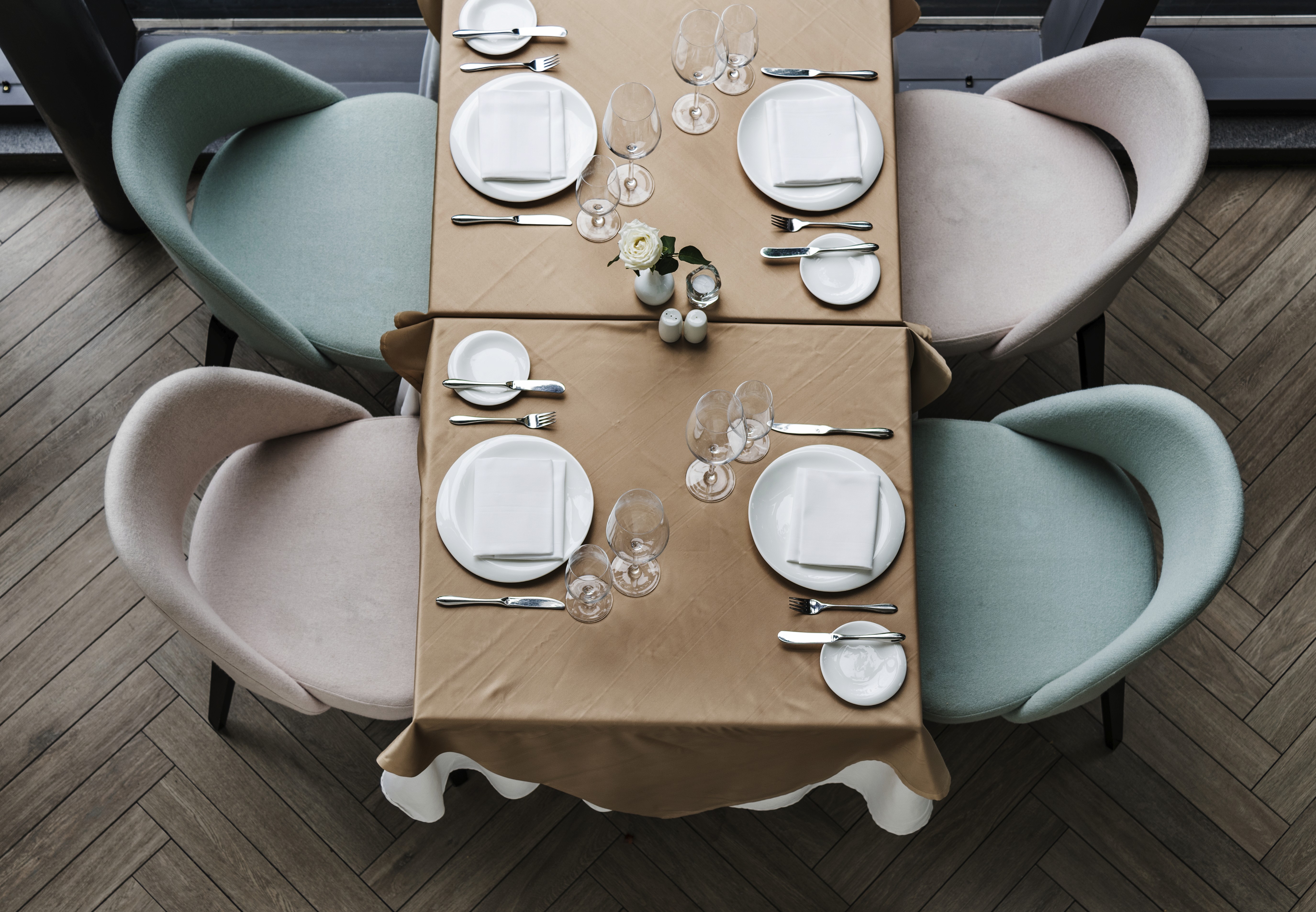
It's Friday at 9:30 PM. You have a table reserved for 8 people. They are 20 minutes late. They are not picking up the phone. Your team has rejected three inquiries this afternoon to keep that table free. The table is still empty.
At 10:00 PM, you assume they are not coming. That is a no-show.
And it costs much more than it seems. It's not just the covers that aren't served. It's the prepared mise en place that goes in the trash. It's the customer you told you didn't have a table for. It's the team that was ready for a night that never came. It's the business margin that narrows week by week without anyone putting a name to it.
This guide explains exactly what no-shows are, why they really happen, and what seven concrete techniques you can implement to significantly reduce them, with or without technology.
What is a no-show and why is it so damaging to your restaurant?
A no-show in the hospitality industry is a confirmed reservation where the customer does not show up and does not notify in advance with enough time to reassign the table. It is not the same as a cancellation: a cancellation gives notice, a no-show simply does not appear.
The real economic impact
The calculation seems simple but the damage is greater than it appears at first glance.
A table of four people with an average ticket of 45 euros per diner represents 180 euros of lost revenue in a single night. But we must add the opportunity cost: that table could have been assigned to another customer who asked that afternoon and was told there was no availability.
The impact on the team
A no-show does not only affect the margin. It affects people.
The kitchen prepares mise en place for diners who do not come. The front-of-house service is ready to serve tables that remain empty. When this happens frequently, demotivation sets in among the team. The team's professionalism deserves real demand, not ghost tables.
What percentage is common?
According to data from the hospitality sector in Spain, between 5% and 20% of restaurant reservations end up as no-shows, depending on the type of establishment, the booking channel, and the time of the week. Weekends and holidays concentrate the highest rates.
Why do customers no-show?
Before talking about solutions, it is important to understand the real causes. Most no-shows are not malicious acts. They are errors, oversights, and misunderstandings that can be prevented.
They forgot (cause number 1, approximately 40% of cases): The customer booked several days in advance, the week was intense, and the reservation was forgotten. There is no bad intention. They simply did not receive the reminder at the right time.
They changed plans and did not notify: The customer knows they are not going, but does not cancel because they do not know they have to, because they feel lazy, or because they assume "they will already know I'm not coming." In many cases, no one explained to them at the time of booking that a timely cancellation has value for the restaurant.
They booked in several places: A practice more common than it seems, especially on special dates: the customer books at two or three restaurants to secure options and in the end only goes to one. The others are left with empty tables without warning.
Date or time confusion: "I thought it was Saturday, not Friday." This error occurs more in reservations managed by phone without subsequent written confirmation. If the customer does not have the details in writing, memories are inaccurate.
The most important conclusion: they are not bad customers. They are customers who did not receive the right reminder at the right time. And that is something the restaurant can control.
7 Techniques to Reduce No-Shows in Your Restaurant
Automatic Confirmation via WhatsApp after Booking
Immediately after the customer makes a reservation, whether by phone, web form, or any other channel, they must receive a written confirmation message on WhatsApp.
This message must mandatory include:
Customer's name
Reservation date (day of the week and full date)
Exact time
Number of diners
Restaurant name and address
Contact information for modifications or cancellations
Why does it work? Because the customer has the details saved in the chat. They can check them whenever they want. The reservation stops being a vague memory and becomes something tangible and verifiable. The percentage of date and time errors drops practically to zero with this measure.
Reminder 24 Hours in Advance with a Confirmation Button
The day-before reminder is the most powerful of all reminders. The customer still has time to reorganize, but the reservation is already close enough to be a real priority on their agenda.
The message must include a clear and actionable CTA:
"Confirm attendance" — one tap on their phone
"Cancel reservation" — if they cannot make it
This has two simultaneous effects. On one hand, the customer who confirms feels more committed. On the other, the customer who cancels on time gives you the chance to reassign the table before it is too late. A cancellation at 8:00 PM the day before is a business opportunity, not a loss.
Industry studies point to a reduction in no-shows of up to 30% with the implementation of this active confirmation reminder.
Reminder 2 Hours in Advance
The last-minute reminder complements the day-before one; it does not replace it. Its function is to catch last-minute forgetfulness, especially for dinner reservations.
For evening-night reservations, the most effective time is between 5:00 PM and 6:00 PM: the customer has just finished work, is thinking about the evening, and receives the reminder when it is most relevant.
The message should be short and direct: "We look forward to seeing you tonight at 9 PM at [Restaurant Name]. Do you confirm?" Nothing more is needed. Brevity makes it easier to reply.
Clear Reservation Policy Communicated from the Start
A reservation policy is not meant to threaten the customer. It serves to create commitment from the very first moment.
When the customer books, they should know that seats are limited and there is real demand for that table. Messages like "your table is confirmed for Friday at 9 PM — please let us know at least two hours in advance if you cannot make it" create a framework of shared responsibility.
The communication must be friendly, never threatening. It is not about imposing penalties (although in some countries this is already an established practice). It is about making the customer understand that behind that table are people who have prepared something for them, and that a timely notice is appreciated.
Always Collect the Phone Number
This point seems obvious but is systematically ignored in many restaurants, especially those that receive bookings through online forms or external platforms.
Without a phone number, no reminder strategy is possible.
The phone number must be a required field in any booking form, regardless of the channel. If the customer comes through TheFork or an external platform that does not share the phone number, it is advisable to set up a welcome flow that collects it.
It is the first step, the most basic one, and the one that enables all the rest. Without it, the restaurant is completely in the dark.
Smart Waiting List
A timely cancellation does not have to be a loss. With an active and well-managed waiting list, it can turn into a booking.
When a customer cancels sufficiently in advance, the system can automatically contact customers who were on the waiting list for that date and time, offer them the available table, and confirm the new booking without human intervention.
This automated flow turns a negative piece of news (cancellation) into a business opportunity (new booking). The restaurant closes on Friday with a full room, even if the road to get there had a last-minute change.
Manual management of the waiting list is unfeasible once a certain volume is reached. Automation makes it scalable.
Post-Visit Follow-Up and Loyalty
This technique does not reduce the next day's no-shows, but it significantly reduces no-shows in the long term.
Customers who receive a thank-you message after their visit have a higher repeat rate and, when they book again, are more careful with their commitment. The emotional bond with the restaurant changes their behavior.
A simple message sent the morning after the visit ("It was a pleasure to have you last night at [Restaurant Name]. We hope to see you soon") has a disproportionate impact for its cost. It costs zero. It builds a relationship. And that relationship reduces no-show behavior in future bookings.
Why is the human factor no longer enough to manage reminders?
Traditional logic says: "we will call the clients ourselves to confirm". The problem is that this solution does not scale.
Sending personalized reminders to 40 daily reservations is unfeasible manually. If each reminder takes three minutes between looking up the number, writing the message, sending it, and recording the response, we are talking about two hours of work a day dedicated solely to managing reminders. In a hospitality operation where every minute of work has a cost, this is not sustainable.
Personalization is key for the reminder to work. A generic message ("reminder of your reservation") has a much lower impact than a message that includes the client's name, the exact date, and the number of guests. Achieving that personalization manually at scale is practically impossible without automation.
Furthermore, the optimal times to send reminders (24 hours before and 2 hours before) coincide with the busiest times in the restaurant. During service, no one has time to review the next day's reservations and send personalized messages.
This is how Bookline automates reservation reminders in your restaurant →
How Bookline reduces no-shows automatically
Bookline implements all the previous techniques in a completely automated way, without the restaurant team having to do anything.
The complete workflow works as follows:
They immediately receive a confirmation via WhatsApp with all the details
24 hours before, a reminder arrives with a confirmation or cancellation button
2 hours before, a brief last-minute reminder is sent
If the customer has not confirmed, the system can initiate an automatic verification call
If the customer cancels, waiting list management is automatically activated
The result measured in restaurants using Bookline is a reduction in the no-show rate from 5% to 15%, depending on the starting point and the type of establishment.
The economic impact of reducing no-shows
The numbers speak for themselves. Let's do the math with a representative example.
Starting situation:
Restaurant with 50 reservations a day
No-show rate of 10% = 5 empty tables a day
Average ticket per table: 112 euros
Daily loss: 560 euros
Monthly loss: 16,800 euros
Situation with Bookline:
No-show rate reduced to 3% = 1.5 empty tables a day
Recovered tables: 3.5 per day
Additional revenue: 3.5 × €112 = 392 euros a day
Monthly recovery: An additional 11,760 euros
Putting the cost of technology into perspective against this return makes the decision obvious. Reducing no-shows is not a customer service problem. It is a business profitability problem.
And there is a solution.
Eliminate no-shows with automation. Request your free demo →
Frequently Asked Questions About Restaurant No-Shows
What percentage of no-shows is normal for a restaurant?
The typical range in the Spanish hospitality industry lies between 5% and 20% of reservations, depending on the type of restaurant, the reservation channel used, and the day of the week. Weekends, holidays, and special dates like Valentine's Day or Christmas Eve concentrate the highest rates. A rate consistently above 10% is a clear sign that the reservation management system needs improvement.
What is the most effective technique to reduce restaurant no-shows?
The 24-hour advance reminder with an active confirmation option is consistently the highest impact technique. It forces the customer to make a conscious decision about their reservation, builds commitment, and allows the restaurant to free up tables in time in case of cancellation. Combined with immediate confirmation after booking, this duo can reduce no-shows by 25% to 35% on its own.
Does sending reminders via WhatsApp work to reduce no-shows?
Yes, and very significantly. WhatsApp has an open rate exceeding 90% in Spain, well above email or traditional SMS. WhatsApp reminders are read almost in their entirety, can be answered with a single tap, and integrate into the original reservation conversation, which gives the customer all the context in one place. The key is for the message to be personalized, brief, and have a clear CTA.
Can you charge for a no-show at a restaurant in Spain?
Yes, it is legally possible in Spain as long as the customer has been informed of this policy at the time of reservation and has expressly accepted the terms and conditions. Some fine dining restaurants request a credit card number as a guarantee and apply a charge in case of a no-show without prior notice. However, this practice is more widespread in high-end establishments and can create friction in restaurants with a lower average ticket. The most effective and least invasive alternative for most restaurants is automated reminders, which prevent no-shows without needing to penalize the customer.
What information should a reservation reminder include to be effective?
An effective reservation reminder must include the customer's name, the day of the week and full date (not just "tomorrow"), the exact time, the number of guests, and the restaurant's name. Including the address or a link to Google Maps for customers who do not know the area well also reduces delays due to disorientation. The message must end with a clear action: confirm attendance or notify if unable to make it. Brevity and personalization are the two most important factors for the reminder to work.